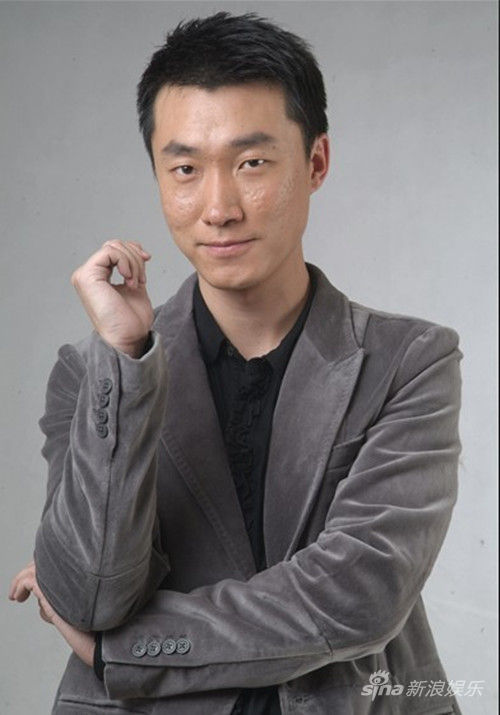
Zhang Zhenhua, ‘Assassination of Yoshikawa’ movie
Analysis of world events. Welcomes feedback.
Zhang Zhenhua, ‘Assassination of Yoshikawa’ movie

Serena Fang, born in Taiwan Province on March 31, 1984, a film and television actress in Taiwan, China. ‘Southern Storm’ movie

Ao Xiang, born on January 3, 1991 in Chengdu, Sichuan Province, is a film and television actor, pop singer, and dancer from Mainland China.





ANU, 80 years old

Hugh White AO is Emeritus Professor of Strategic Studies at the Australian National University. His work focuses primarily on Australian strategic and defence policy, Asia-Pacific security issues, and global strategic affairs especially as they influence Australia and the Asia-Pacific. He has served as an intelligence analyst with the Office of National Assessments, as a journalist with the Sydney Morning Herald, as a senior adviser on the staffs of Defence Minister Kim Beazley and Prime Minister Bob Hawke, and as a senior official in the Department of Defence, where from 1995 to 2000 he was Deputy Secretary for Strategy and Intelligence, and as the first Director of the Australian Strategic Policy Institute (ASPI). In the 1970s he studied philosophy at Melbourne and Oxford Universities. He was the principal author of Australia’s 2000 Defence White Paper. His major publications include Power Shift: Australia’s future between Washington and Beijing, [2010], The China Choice: Why America should share power, [2012], Without America: Australia’s future in the New Asia [2017], and How to defend Australia [2019]
Career highlights
1985-1991 Senior Adviser to Defence Minister and Prime Minister; 1995-2000 Deputy Secretary for Strategy, Department of Defence; 2001-2004 Director of the Australian Strategic Policy Institute, 2004-2011 Head of the Strategic and Defence Studies Centre, ANU . 67 years old.

Prof Hedley Bull, IR
Hedley Norman Bull (1932-1985), professor of international relations, was born on 10 June 1932 at Enfield, Sydney.
In 1955 Bull was appointed assistant lecturer in international relations at the London School of Economics and Political Science; he became a reader in 1963. After winning the Cecil peace prize (1956), he was awarded a Rockefeller travelling fellowship (1957-58), which took him to Harvard and other universities in the United States of America, and a North Atlantic Treaty Organisation fellowship (1959) to Paris. His book The Control of the Arms Race (1961), which gained him prominence internationally, showed that he had mastered the concepts and issues relating to nuclear weapons, while understanding the historical background of earlier attempts to limit other kinds of armament. An early member, he was later a councillor (1968-77, 1981-85) of the (International) Institute for Strategic Studies. In 1964 he accepted the post of director of the arms control and disarmament research unit of the British Foreign Office. Surveying the whole of his discipline, he often inflicted punishing blows on what he considered foolishness in its development, such as the `scientific’ pretensions of behaviourism. A notable example was his explosive article `International Theory: The Case for a Classical Approach’, published in 1966 in World Politics.
In 1967 Bull returned to Australia as professor and joint head of the department of international relations, Research School of Pacific Studies, Australian National University.
One of Bull’s major preoccupations was the nature of the international system and its potential for world order. He explored the implications of the great increase in the number of sovereign states since World War II. In particular, he asked whether Third World states would adapt themselves to what had been an essentially Eurocentric society. In his seminal work, The Anarchical Society (1977), he concluded that despite the brutalities of world politics, the historic system of sovereign states exhibited a degree of actual co-operation and the possibility of future extension of an international society. In 1984 he developed these themes further in The Expansion of International Society, which he edited with Adam Watson.
A formidable but always fair opponent in debate, Bull was a kind and patient teacher. He could be abrasive with both colleagues and students, but rarely caused lasting offence. Tall, slightly stooped and inclined towards portliness, he was serious but never solemn. Survived by his wife and their son and two daughters, he died of cancer on 18 May 1985 at Oxford and was cremated. He had been an atheist since 1949. The University of Oxford and the ANU created positions and scholarships in his honour.
Analysis of world events. Welcomes feedback.
Stuff and things.
the more you learn, the more you earn
Reading, Writing, Linking, Thinking, Talking and Listening
Backstage topics for Everyone Living Outside the Matrix
commentary + perspective + creative adventures
Gratitude is wealth.
Post News, Views, Conscience etc
This site provides you with general news, blogs and music promos across board. contact us on +233541346716
UK Breaking news
One of the Leading Digital Magazines in Asia
The latest news on WordPress.com and the WordPress community.
Analysis of world events. Welcomes feedback.
Stuff and things.
the more you learn, the more you earn
Reading, Writing, Linking, Thinking, Talking and Listening
Backstage topics for Everyone Living Outside the Matrix
commentary + perspective + creative adventures
Gratitude is wealth.
Post News, Views, Conscience etc
This site provides you with general news, blogs and music promos across board. contact us on +233541346716
UK Breaking news
One of the Leading Digital Magazines in Asia
The latest news on WordPress.com and the WordPress community.

 Asiapacific Security