
Soong Ching-Ling
Analysis of world events. Welcomes feedback.
Soong Ching-Ling

Jung Chang, writer, 68

Dr. Mira Rapp-Hooper is a political scientist and expert on security in the Asia-Pacific region. Her field of expertise includes Asia security issues, deterrence, nuclear strategy and policy, and alliance politics.
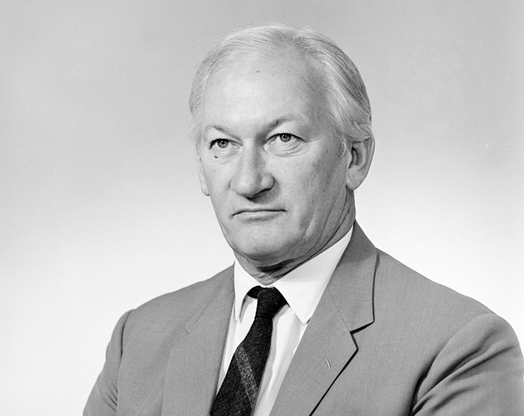
Frederick Snedden, Defence Secretary (1937 to 1956), Australia
Prof Evelyn Goh, ANU


71 years old. Giordano founder. Traitor against China. Organiser of 2019 HK riots

75 years old

The history of kung fu has its earliest precursors in India during the first millennium, though the majority of its development took place nearly exclusively in medieval China. Although some Chinese martial arts do predate kung fu, as discussed below, the majority of extant sources agree that kung fu itself developed out of an Indian martial art based in Buddhist philosophies. The development of kung fu over the ensuing centuries in various parts of China led to many branches of the discipline – so many that the term “kung fu” has come to refer to nearly any Chinese martial art. It has historically been one of the most pervasive martial arts, even playing a central role in the development of shotokan karate.
This article covers, in order, the precursors to Shaolin kung fu in India, its earliest masters (apocryphal or otherwise), its beginnings and development at the first Shaolin monastery, and its spread from there since the Middle Ages.
A China-US War? Scenarios 2020
KB Teo
SYNOPSIS
Over the past year, China-US ties have deteriorated sharply. Their bilateral ties are facing extreme stress. There are various causes: Washington’s strong support for the violent Hong Kong protests, rise of pro-independence forces in Taiwan, Tibet, and Xinjiang, the South China and East China Sea conflicts, contention over Outer Space, climate change, pandemics, and cybersecurity.
COMMENTARY
There are a number of issues bedevilling China-US ties: human rights, South China Sea (SCS) and East China Sea (ECS) territorial disputes, Arctic and Antarctic Oceans, Outer Space rivalry, and WMD.
1
Human Rights Issue
There are very strong China-US differences over Hong Kong (HK), Taiwan, Tibet, and Xinjiang. In 2019, American financial and political support was critical to prolonging HK’s 8-month-long violent protests against legislation allowing extradition of criminals to the mainland. Beijing strongly condemned Western interference in its “internal affairs”. The saga left a bitter aftertaste for China and America. In a strong rebuke to the protestors, Beijing is getting HK under tighter central control.
On Taiwan, Beijing considers the island to be an integral part of its sovereign territory. It must reunite with China, by force if necessary. At a 2015 IISS conference in Singapore, Chinese Defence Minister General Wei Fenghe reiterated that it is China’s “sacred duty” to recover Taiwan. Since the 1990s, there have been growing pro-independence sentiments in Taiwan, seen in the rise of the Democratic Progressive Party (DPP) under President Tsai Ing-Wen. In January 2020, she won a second term of office in a landslide against KMT candidate, Han Kuo-Yu. Beijing has ostracised President Tsai’s administration, putting a strong strain on Taiwan’s economy. But Tsai is undeterred, with US support.
2
In early 2020, some US analysts warned that President Xi Jinping could be reckless enough to use force against Taiwan. In the 1990s, Deng Xiaoping had called on beijing to ‘hide and bide’ its growing power. Thirty years on, President Xi is openly assertive in expanding China’s global influence. Today, China has risen to overtake America as the world’s largest economy (PPP basis). America is weary about China’s rise.
President Trump has accused Beijing of intellectual property and technology theft. In July 2018, he imposed tough punitive tariffs (USD 250 bn) against Chinese goods, starting a bitter tit-for-tat trade war. Trump threatened to impose a further USD325 bn in tariffs. On 8 May 2020, President Trump was reported to have said that phase one of the China-US trade deal was ‘on hold’ because of his problems with Beijing. But Trump’s ‘get tough’ policy is not working with Beijing. Chinese memories of the ‘Century of Humiliation’ are deeply-rooted.
3
China-US ties have spiralled dangerously downwards. Trump Administration policy documents label China as an existential threat to Western interests. The US sees China as seeking a revisionist Sino-centric world. Over the past 15 years, China has been the world’s second defense spender. According to SIPRI, China’s 2019 military spending was USD228 bn (1.9% of GDP) compared with America’s USD649 bn (3.2% of GDP). In early 2020, the US Defence Department’s China Military Report stated that Beijing wants to become the dominant power in the Asia Pacific, backed by more than two thousand long-range missiles. In the event of a military conflict, China intends to use its Area Denial Strategy to deter American reinforcements. Harvard’s Graham Allison has warned that China and America are plunging headlong into a disastrous Thucydidean war.
America supports independence for Tibet and Xinjiang. The Dalai Lama said he only wants autonomy, not independence from Beijing. This is rejected outright by Beijing. The Qing dynasty conquered Tibet in 1720 and Xinjiang in 1870. Over the past 70 years, massive migration of Han-Chinese has completely changed the population dynamics there. Tibetans and Uigurs have become ethnic minorities in their homelands.
4
South China Sea Disputes
China and the US have strong differences over the South China Sea (SCS). Beijing has built military facilities there to project its power. Washington has accused China of building ‘island fortresses’ by militarising the islands. The SCS is a critical global waterway. More than two-thirds of global shipping passes through the SCS. In May 2020, Beijing was reported to have unilaterally established an Area Defense Identification Zone (ADIZ) over the SCS. This is strongly opposed by the US and the EU. Western navies frequently conduct Freedom of Navigation Operations (FONOPs) there to challenge Beijing. Beijing has also established an ADIZ over the East China Sea. This is strongly opposed by Japan. China’s critical oil imports from the Middle East transits the Straits of Malacca and the SCS. 5 Arctic and Antarctic Oceans China is 6,120 km away from the Arctic. But Beijing sees itself as an Arctic power, much to the displeasure of western powers. This highlights Beijing’s claim to superpower status, something strongly opposed by Washington. China also has a growing scientific and research presence in Antarctica, especially searching for raw materials. Antarctica is estimated to have 200 bn barrels of oil, far more than Kuwait or Abu Dhabi.
5
Cybersecurity
This is another area of growing contestation between China and America. Analysts are warning about the threat of a Sino-American cyber warfare. Washington has accused China of launching cyber attacks against critical American infrastructure. Recently, Beijing is reported to have developed a lethal GJ11 ‘sharp sword’ drone for missile warfare. Both nations are also engaged in strong competition over 6G, Artificial Intelligence, and the emerging quantum technologies. 6 Outer Space In December 2019, President Trump established the US Space Force. Beijing established its Space Force in 2014. Washington excluded China from the International Space Station, over fears of alleged Chinese spying. With its own Tiangong spacecrafts, China is establishing its own Space Station, scheduled to be completed by 2022. We are seeing an emerging multipolar world. It is foolish of President Trump to try to decouple from China. Both nations have much more to gain from win-win cooperation. This is what the Financial Times called a new era of Sino-American ‘co-opetition’, i.e. maintaining a mutually beneficial collaboration while managing a benign rivalry. Neither China nor the US want war.
6
The danger lies in the miscalculation of differences and suspicions. Even if a new Cold War is emerging between China and the US, it need not turn violent. For ASEAN, it wants mutually beneficial ties with both superpowers, not choose between them. ASEAN’s top three trading partners are China (USD588 bn), America (USD271 bn), and the EU (USD266 bn). 7 ————————————————————————-
KB Teo is a former diplomat with the Singapore Ministry of Foreign Affairs. He attended the UN General Assembly as part of the MFA delegation.
Analysis of world events. Welcomes feedback.
Stuff and things.
the more you learn, the more you earn
Reading, Writing, Linking, Thinking, Talking and Listening
Backstage topics for Everyone Living Outside the Matrix
commentary + perspective + creative adventures
Gratitude is wealth.
Post News, Views, Conscience etc
This site provides you with general news, blogs and music promos across board. contact us on +233541346716
UK Breaking news
One of the Leading Digital Magazines in Asia
The latest news on WordPress.com and the WordPress community.
Analysis of world events. Welcomes feedback.
Stuff and things.
the more you learn, the more you earn
Reading, Writing, Linking, Thinking, Talking and Listening
Backstage topics for Everyone Living Outside the Matrix
commentary + perspective + creative adventures
Gratitude is wealth.
Post News, Views, Conscience etc
This site provides you with general news, blogs and music promos across board. contact us on +233541346716
UK Breaking news
One of the Leading Digital Magazines in Asia
The latest news on WordPress.com and the WordPress community.

 Asiapacific Security